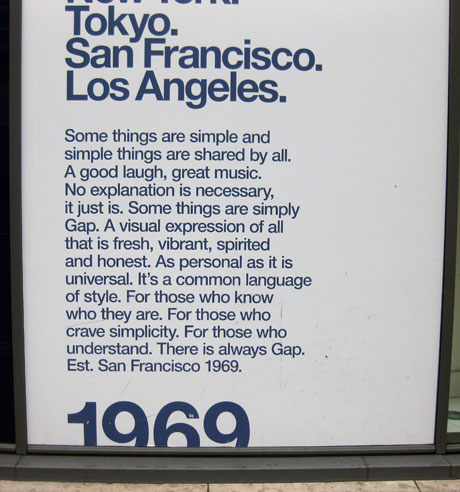
All posts by admin

Tone of voice. No tone of voice.

What is tone of voice? And does it really matter?

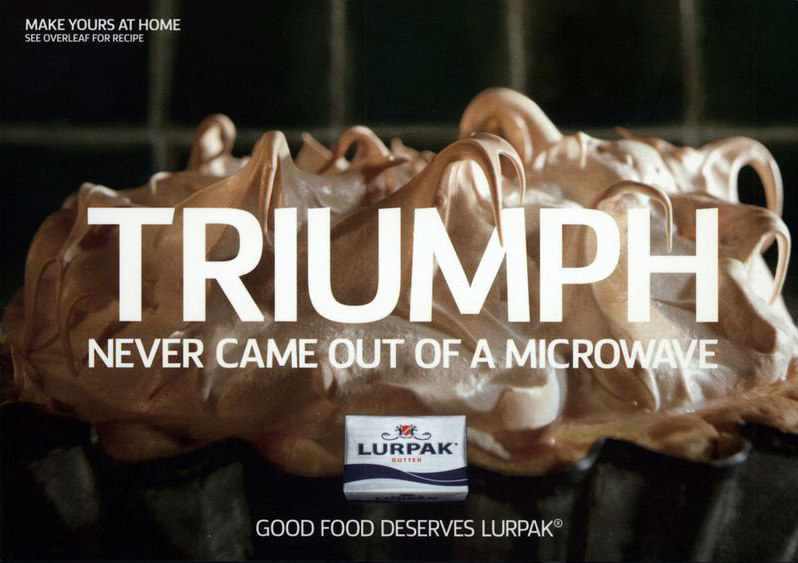
We can show you. All we need is some butter and a Jedi Master.

TONE OF VOICE

A humble ingredient, no more: a rousing tone for Lurpak plays on how you feel when you’ve baked something yourself. Clever.

Lurpak campaign, Weiden and Kennedy, 2011

NO TONE OF VOICE

Spend £££s to get the rights to use Yoda’s likeness from Lucasfilm, then just cut and paste any old words to go with it.

Yodafone: no tone of voice there is.  Photo: Frank Steiner
Yodafone: no tone of voice there is. Photo: Frank Steiner

What’s depressing is that most of the time, ads and marketing follow Yodafone’s example. No one thinks about the tone, the personality in their words or the effect they want them to have.

The day we went to Selfridges. To speak not to shop.

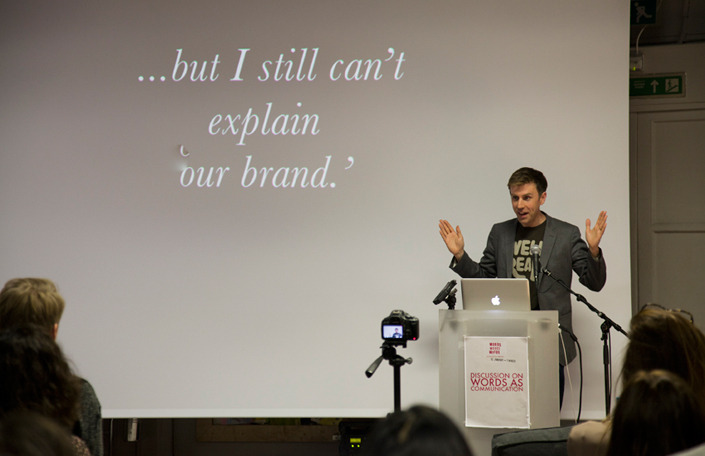
Here’s Rob talking about stopping brand slop in Selfridges at an event set up by It’s Nice That.


We were tickled that the soundbite flying around afterwards on Twitter was: ‘If you feel like a berk saying it you shouldn’t write it down. – Rob Mitchell’. We’re determined to bring the word berk back into conversation.

If you’d like us to talk about brand slop at your event,
drop us a line.

Once upon a time we didn't need strategic storytelling

Once upon a time stories weren’t called ‘narratives’ and we didn’t need a process, archetypes or rules to help us tell them. And most authors of books, plays, films and the like (ie real stories) didn’t use them either. So why have so many agencies started banging on about the power of storytelling all of a sudden? And wrapping them up in pseudo science? And why doesn’t anyone care that the stories at the end of it all aren’t very good?

Strategic storytelling is supposed to draw on ideas about structure and characters that have been around since the days when we were swapping myths around a campfire. In 1949, Joseph Campbell wrote a book about it called ‘The Hero with a Thousand Faces’, in which he compared myths from around the world and said they all shared the same structure: roughly a hero goes on a journey, faces some challenges and comes back to live happily ever after. George Lucas even said Star Wars was part-inspired by it.

There have been other books and theories too, and many of them, like Campbell’s, stir Freud, Jung and pop-psychology into the pot. But one of the big problems, as is often the case with things like this, is that these frameworks are made up after the stories are written. And this post-rationalised theory doesn’t stand up to scrutiny because most myths only follow bits of Campbell’s ‘journey’.

Whether stories can be analysed like this or not, the bigger problem is that it’s almost impossible to write stories following a process. And it’s ten times harder to do this about a brand. If you’ve ever had the unfortunate experience of trying to work out what a brand’s archetype is, you’ll know that they’re rarely a neat fit. You end up with a strange chart that says a packet of crisps is part ‘hero’, ‘traveller’ and ‘lover’. What’s worse is that there’s not a great deal you can do with that information in practice. If we’re set a brief to ‘write like a sage’, it doesn’t give us a steer one way or another. It just sits in a PowerPoint presentation before the proper work starts.

You can see how strategic storytelling muddies thinking by looking at the words. Here’s what a storytelling agency in the UK writes about what they do: ‘We focus on the human elements of change in business, uniting people behind a common power through the power of narrative’. We’re not singling them out – that kind of blurb is representative of the sort of ‘storytelling’ briefs we’ve been asked to work on lots of times. Words like triangulation, frames and human truths pop up. It’s a bit like when you put some words through Google Translate from English to another language and back again. Ideas get badly translated with marketing speak mixed in. It’s all ‘platforms’, ‘driving our approach’, ‘unearthing insights’ and the ‘power of this, that and the other’.

We’ve taken a leaf out of Joseph Campbell’s book and looked into the kind of people who use strategic storytelling. And the same archetype comes up again and again. Let’s call them ‘the Consultor’. The Consultor loves process, but they want to keep a bit of creativity too, so they plump for stories with process mixed in. Time for an alarm bell. Good stories don’t need frameworks. Once you’re at a point where you need to remind people what a story is in the first place, something’s going wrong. And alas, if people stay on this strategic storytelling journey, they’ll never get the happy ending they’re after.

A tea by any other name

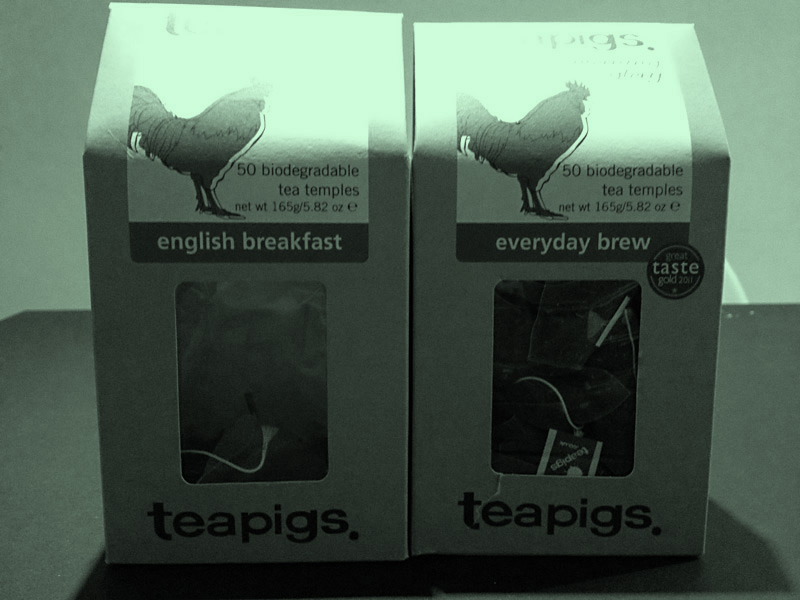
Spot the difference between these two boxes of Teapigs tea.

Everyday Brew... Formerly known as English Breakfast... Formerly known as Morning Glory...
Everyday Brew… Formerly known as English Breakfast… Formerly known as Morning Glory…

They look the same; they taste the same. The only difference is their names.

Once upon a time this ‘Everyday Brew’ was called ‘English Breakfast’. After all, this is Teapigs’ signature blend and their tea is fancier and tastier than PG Tips. But some of their customers didn’t know that. They kept asking them why they didn’t make a regular, everyday tea. Which was probably all the more galling because once upon an even earlier time (we’ve been drinking Teapigs since they were born), this tea was called ‘Morning Glory’. But no one had the foggiest what that was either.

When brands name their products they often jump straight to the creative, interesting names first. This is their name, their baby, and they want it to stand out. When Molton Brown asked us what we thought of ‘candelas’ (what they used to call candles) and ’emporias’ (shops), you can guess what we said. Swapping them back to everyday names swiftly cleared up a lot of SEO headaches they were having – no one types ‘candelas’ into Google. And with fewer brand-y names flying around, it’s easier for Molton Brown to showcase the names they want customers to remember.

So next time you’re coming up with a name for, say, a fancy gardening brand, remember it’s often best to call a spade a spade.

Jargon isn't the problem and 'Plain English' isn't the answer

About this time every year the Plain English Campaign has its gobbledegook awards. It goes roughly like this: they pick some prize pieces of incomprehensible twaddle, which fill some easy column inches in a few newspapers. We roll our eyes at all the rubbish jargon and business clichés we use at work nowadays and then we move on.

It’s good PR for the Plain English Campaign and, in a small way, it highlights how much nonsense people write in the name of work. What it doesn’t explain is who the main culprits are, why they do it and the root causes of it.

One reason why we never get to the bottom of why there’s so much incomprehensible writing at work is because we too easily dismiss it with one all-conquering word: jargon. But most of the words we label as jargon, such as the Latin or Greek medical terms doctors use, are harmless, as long as they make sense to the people who need to use and understand them.

No, jargon is relatively easy to spring clean. The problem is woolly thinking – when the words hide that there’s nothing to say. And that’s where the Plain English Campaign falls short. Writing can get a sparkly crystal mark and it can do it without saying very much at all.

You can spot writing that’s running on empty thinking as soon as words like ‘experience’, ‘solutions’ and ‘environments’ crop up. They’re not made-up words or jargon, exactly. They’re empty vessels that apply to everything, but say nothing. Going to Westfield is an experience, not shopping. A new phone is an experience, not a way to call your friends (the word ‘device’ probably gets flung in for good measure). It’s a one-size-fits-all strategy, what we call brand slop, and you find it in middle management at most big organisations.

Once you realise brand slop uses essentially empty words, it’s not much of a leap to notice that most of these departments operate on a meta level, creating strategies, PowerPoint presentations and charts that don’t have any reason to exist. Try translating brand slop into simpler words (or ‘Plain English’) and you soon find that you can’t. Or if you can, you find that it says nothing, just more simply.

Most of us come across brand slop at work. A while ago we met a friend of ours at his office. He’s a social worker and his job involves making lots of difficult decisions about whether a child would be better off with their parents or in care. As you’d imagine, it’s stressful and emotionally draining. Meanwhile, his well-meaning managers decided that the best way to help him would be to give him some positive words, or ‘values’, of encouragement. And what had they come up with? ‘Think’ and ‘Inspire’. Plastered over the screensaver of every computer screen ‘think’ and ‘inspire’ were spinning around in 3D. Some help.

Brand values are one of the biggest examples of brand slop. They’re either always open to interpretation so everyone can claim they’re ‘living the values’ (yes, these phrases exist too) by being ‘warm’ and ‘friendly’ and whatever. Or, as someone in the brand team of a big mobile network once explained to us, it’s nigh on impossible to take these mushy words out of PowerPoint presentations and make them work in real life. When someone from a call centre asked him ‘how exactly can I be more “bold” on the phone when I’m talking to a customer?’ there wasn’t an easy answer. Again, it’s easy to test this sort of brand slop. Let’s say your company’s values are ‘open, honest and passionate’. Now ask the opposite. Who’d want a business that’s closed, dishonest and indifferent?

Values are broad and are usually thrashed out internally to get buy-in. But as a result they’ve become a kind of pep talk for organisations to convince and reassure themselves that la-la-la everything’s ok really, without tackling any of their ingrained problems. Actually, ‘the opposite test’ is a good way to reveal what an organisation’s problems really are. We once worked with a company that had ‘adventurous’ as one of its values. We soon found out that they’d come up with this because their people were timid and they wanted them to take more risks. It didn’t work. Despite the words on all the walls, Ranulph Fiennes wouldn’t have fitted in very well there.

So where did all this brand slop come from? You’ll see its roots in the theories of management books, journals and consultancies, and the sort of things business students learn on MBAs. A lot of the original theory and research is sound enough. Pick up an old book by a management guru like Peter Drucker and it’s all pretty no-nonsense. Or read a bestseller by Jim Collins and you’ll find yourself nodding along.

The problems happen somewhere after that. Because what brand slop does is take management theory and tries to fit it into a neat model everywhere else, even when that doesn’t work.

You simply can’t sum up a brand – the irrational bit about how people feel about one company over another – by squishing it into a triangle, or wrapping it up in a list of (often the same) words plucked from a thesaurus.

It’s not just marketing and branding, it’s the same story in every management department. Once upon a time Human Resources was called Personnel and its main role was to do the practical things that companies need for its people, from hiring and firing to all the things in between. But in the seventies management books started talking about people as if they were numbers. Soon ‘human capital theory’ and ‘human asset accounting’ were all the rage. By the time the Harvard Business School introduced Human Resources to its MBA at the beginning of the eighties, there was no turning back and no one questioned the idea that ‘people are your greatest asset’. Well, not until the book ‘Managing Brand Equity’ came out a decade later and then brands were crowned the latest, greatest asset.

The idea of turning brands and people into ‘assets’ reveals a lot about the underlying problem with brand slop. It’s not that it isn’t quite true, it’s that you can’t treat things like brands and people in the same way as capital. Numbers can be moved around on Excel sheet, but in the real world people’s skills and talents can’t.

In the end most big companies are good at being just that: big. Using their muscle to cut costs in production and distribution. And business books or MBAs can help with that. You can learn how to make logistics (or the supply chain as the MBA-ers call it) more efficient from a book. The same goes for anything to do with distributing products and financially restructuring a business. But what do all those things have in common? They’re all about operations: the nuts and bolts of running a company. And, despite what all the strategic presentations tell you, most big companies still get their profits from these sort of operational tweaks. Whether that’s by finding more places to sell things, making more of them, or by or cleverly restructuring the way they’re made or work.

So the process stuff is easy to solve. Creativity, innovation and making people feel good about a brand aren’t. This is when big organisations turn to brand slop. Except it never works. All the good ideas and innovation usually come from copying smaller, gutsier start-ups or by buying them and, more often than not, messing them up with layers of process and bureaucracy. Just read What happens after Yahoo acquires you to get a first-hand account of what goes on behind the scenes when a smaller start-up is taken over and infected by brand slop.

But what about Apple, the consultant’s favourite anecdotal branding success? Funnily enough, if you read Walter Isaacson’s biography of Steve Jobs, one of the most striking things is how little time Jobs had for PowerPoint, idea-sucking research, and elaborate strategies. You could argue that one of the reasons Apple are so successful is that they manage their supply chain well and they’ve cut out the brand slop altogether.

It’s not a bad thing to write down what your brand is or to improve how your company works. The problem comes when you over-simplify difficult things and use empty language to do it. It doesn’t add anything or help you run your business better. And if all the money you’re spending on marketing, management, and HR strategies isn’t doing anything, what’s the brand slop actually there for?
An open letter to Sir Richard Branson

Hello Richard,

A lot of newspapers this morning are talking about how you’ve bought Northern Rock for a bargain price at the expense of us taxpayers. We’ll grumble to the chancellor about that. But seeing as you (and some private equity suits) have bought it, we hope some good will come of it.

Richard, this is your chance to shake up retail banking: some of Britain’s most unloved high street brands. Here are some ideas to get you started.

1. Never forget it’s our money. Put yourself in our shoes and do away with all the burdensome rules like £250 daily limit from a cash machine. Start a campaign to get rid of transfers taking up to ‘three working days’.

2. Be so spot-on at customer service that no one will even think of asking you for a customer charter.

3. Better still, publish complaints and tell us how you dealt with them. We’ll make up our own minds.

4. YOU ARE A BANK, not my friend. So no cutesy writing please, it doesn’t suit you. And while we’re at it, no adverts of staff singing. It doesn’t make us think you’re like us, it makes us think you’re trying too hard.

5. Don’t employ someone junior to wear a sash and greet me when I arrive at your bank. Hire people who can actually help me.

6. You’re Virgin. So add panache and get every last detail right. Uniforms as cool as Virgin Atlantic or Eurostar, online banking as easy to use as iTunes. And no plastic pens.

7. But don’t be flash at the expense of good, helpful service. Otherwise you’re Foxtons and everyone will resent that you’ve spent their money on fridges and fizzy pop.

8. Don’t even think of trying to look like a coffee shop. I want banking to be quick. I don’t want to stick around for a latte.

9. Stop relying on your computers and credit agencies to weigh up risk. People are more complicated than algorithms. Get real people to make a call on whether or not customers can get a loan.

10. That way you can be smarter about the products you offer too. You could be the bank that gives better rates to young first time buyers or small businesses, without getting in a subprime-esque mess.

11. Treat us with intelligence. A bonus £5 a month or PizzaExpress vouchers (that I can get from anywhere) make me sceptical, not loyal.

12. How about a current account with the same interest as an instant access savings account?

13. Don’t sell, sell, sell when I’m paying in a cheque. Yes, I have ‘thought about how much I could save from a mortgage instead of renting’, but I’m not going to make a spur-of-the-moment decision there and then.

14. Make the words ‘I’ll need to put you through to our blah-de-blah department’ a thing of the past. Keep your knowledge about customers in one place, from the start.

15. Tell us what you invest our money in – or ask us. And don’t invest more money than you’ve actually got in your bank. We’ve got savvier about banking now and it matters to us.

Above all, don’t just do a whitewash job and stick a Virgin logo on a bog standard bank. Ok, so private equity people aren’t known for thinking long term, but learn from what happened when you first took over Virgin Trains and how you turned it around when you started investing in better trains and service.

Richard, this could be our last chance to shake up retail banking. So don’t blow it.

Fingers crossed,

We All Need Words

Edit

Sales are down. Research shows you’re squeezed on all sides. It’s getting harder to pigeonhole your customers into a neat ABC1234 PowerPoint. Meanwhile, brighter, smaller, more nimble companies are snapping at your heels and stealing your thunder.

So what do you do? Outwit your competitors and start developing newer, shinier products?

Or do you edit?

Edited... a hand picked selection of pieces by Topshop\'s Head of Design in Oxford Street, this summer...
Edited… a hand picked selection of pieces by Topshop’s Head of Design in Oxford Street this summer…
...And now this. The Top Man General Store is a curated collection of Topman clothes in Shoreditch.
…And now this. The Top Man General Store is a curated collection of Topman clothes in Shoreditch.

The moral of the story? New, new, new isn’t always the answer. Sometimes the best way to grow is to get smaller.

How to sum up your brand in a line

How to describe your brand in a few words.
How to make it really, properly, actually different.
How to sell it in.

We can’t really show you a lot of the work we do because so much of it is hush-hush. But we can tell you the sort of things we get up to and how we do them. We’re often asked to sum up a brand in a sentence. Some call it a ‘positioning’ statement, a ‘purpose’ statement or a ‘core thought’. Whatever the label du jour, it’s not easy to do, especially when it’s for a big company with lots of people, in an ‘increasingly competitive marketplace’ (as briefs really shouldn’t say). We’ve been tackling these one-liner projects for Carluccio’s, Molton Brown and a TV company in the past few months, and while we can’t show you our answers in all their wordy glory, we can tell you what we’ve learnt along the way.

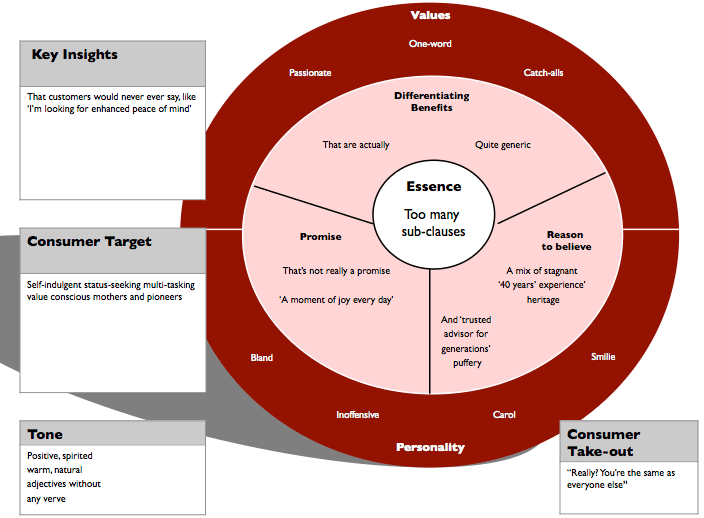
Rewinding to the SOS phone call at the start, we’re often asked to help when a company is completely stuck. Which usually means one of two things. Either they’re trying to work from a brand diagram like this:

Exhibit A: the woolly brand diagram.

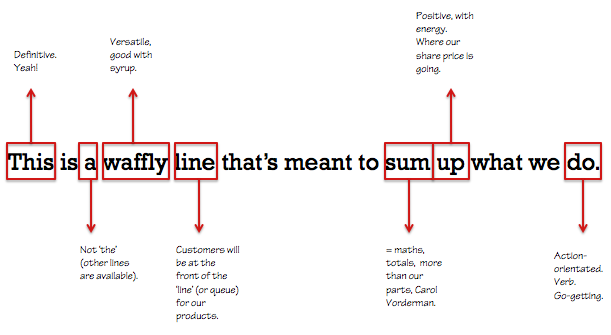
Or they’ve got a line and they’re dissecting every word like this:

Exhibit B: the analysed-to-death-line.

Either way, it all adds up to the same problem. They’re struggling to sum up their brand without it a) sounding wishy-washy and b) sounding like everyone else.

Why? We think the words themselves are only half of the problem. To crack this sort of job you need to be really clear about what you want you want to say in the first place.

Here’s how:

1. DON’T WORRY ABOUT THE LINE YET

Really. You don’t need to worry about it until the very end.

2. DO YOUR THINKING AND RESEARCH BEFORE YOU PUT PEN TO PAPER

We covered some of this before. Start wide and think big: don’t edit or rule out thoughts too quickly. Try to record as many different angles or ways of summing up or looking at your brand. Look at the research but don’t rely on it. Speak to anyone and everyone who has something to say or might want a say later.

3. DON’T COME UP WITH IDEAS IN WORKSHOPS

Controversial. But we’ve only ever seen diluted brand ideas come out of workshops because too much by committee weirdness and politics gets in the way. Use workshops and interviews to get overall opinions, not to come up with ideas.

4. WRITE UP THE BEST IDEAS LONG-HAND

Once you’ve spoken to the right people and done your research, write up lots of different little ‘stories’ to describe the brand. Aim to write at least a couple of paragraphs, but no more than a page for each one. These ideas and stories should be rooted in your brand and what it’s about. They shouldn’t be so much of a stretch (or ‘aspirational’ as the brand robots say) that they feel disconnected or out of reach. And the golden rule? Write things long-hand. Don’t say you’re innovative, write about the innovative things you do. Be as opinionated as you can too: think about the main thing you want to say (if you say everything or be all things to all people it’ll turn into mush). Keep working on these little stories until they feel really tight. If any ideas feel a bit same-y, merge or cut them.

5. SHORTLIST THE ONES THAT WORK THE BEST

Sounds easy enough, doesn’t it?

6. TRUST YOUR INSTINCTS

(If the ideas are good to start with, that is.) People are pretty good at picking an overall story that feels right and true. At first. But then there’s a tendency to over-think the words and settle on something a bit blah. First instincts (the overall ideas that most people are drawn to) are nearly always right.

7. HOLD ON TO THE OPINION

Lead with one idea and make it as bold and clear as you can. Never merge two good ideas. If you want to say other things, still lead with an overall thought.

8. DON’T BE TOO BROAD

Don’t rule out a strong route because it feels too narrow, because, say, some of your products don’t fit neatly with it. It might be that your products don’t sit comfortably for a reason: they aren’t a good fit with your brand. Think of what happens when brands do something out of character, e.g. when McDonalds does healthy salads. Likewise, Innocent could make a chocolate bar, but it’d be just plain (chocolate) wrong.

9. WORK ON MORE ROUTES IF IT HELPS

But in the end pick one overall idea and stick to it.

10. THEN, AND ONLY THEN, WORK ON THE LINE

Write a line to go with the overall idea in lots of different ways. It’ll probably help to write it as a sentence, at least to start with. Shortlist the best ones and only put forward lines that clearly sum up the idea.

11. ET VOILA: YOUR BRAND LINE

If only it were that easy. Things are still prone to go wonky. So don’t leave anything to chance. Remind everyone making the decision to think about the line strategically: does it sum up the overall brand idea well? Could other brands use the same line or claim to say the same thing? Will it make a splash and last. Resist the temptation to go for a line that sounds catchy but doesn’t mean very much (this is not a jingle). And don’t even think of testing the line in research.

12. AND IF ALL ELSE FAILS

A line isn’t the be-all and end-all. A few lines, or a longer story that works, are far better than a line that doesn’t.

Meet our new recruit

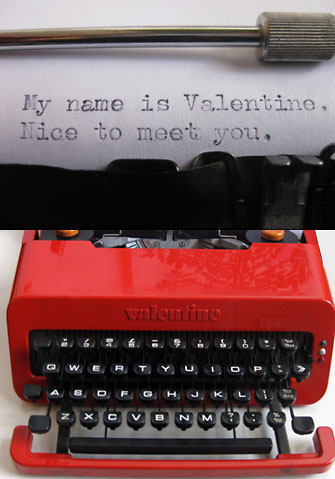
DEAR VALENTINE, THIS IS TO TELL YOU ARE MY FRIEND AS WELL AS MY VALENTINE.
AND THAT I INTEND TO WRITE YOU YOU LOTS OF LETTERS…
(From the Olivetti Valentine user manual.)

Olivetti Velentine
 

We just bought a Valentine typewriter. It was made over forty years ago.

So why does its user manual feel (and sound) brighter, crisper and clearer than any guides that come with phones in 2011?

(Thanks to Adam Richardson for putting his copy of the user manual on his blog.)

We’re sending our Samsung Galaxy back.

Just don't do it

We think we’ve uncovered a global conspiracy to make all straplines sound the same. American Express’ strapline used to be ‘Don’t Leave Home Without It’ and now it’s ‘Realise Your Potential’. They had a memorable line and now they could be anyone. If they swapped their line with Microsoft’s ‘Your potential. Our passion’ we bet no-one would blink an eye.

So last week, when the founder of Leon (or @Henry_Leon as his Twitter pals know him), asked his followers what they’d think if Leon changed their strapline from ‘naturally fast food’ to ‘global fast food’, we were intrigued to see what would happen.

The Question from @Henry_Leon

If we described Leon as “Global Fast Food” rather than “Naturally Fast Food” would you kill us?

The Answers from his Twitter followers

Global sounds like it may have travelled a long way.

I don’t think it sounds as good. Puts me in mind of Deliverance, which confuses the bejeezus out of me.

Personally think naturally is better.

“Global Fast Food” sounds like McD, BK, KFC. “Natural Global fast Food”??

Two different messages. Global sounds a little more multinational/faceless corporation. It ain’t broke, so why fix it?

Isn’t MacDonald’s global fast food?

Slightly more realistic to call it Londoncentric fast food though, no?

The word Global reminds me of Giraffe. That cannot be a good thing.

I prefer ‘Naturally’ it’s a clear message about values – not sure what ‘Globally’ would be trying to impart?

I think it’s a subtle distinction that loses something about Leon’s lovely USP. But what do I know?

It sounds a bit naff. Like ‘fusion’.

I think it would be less representative of what you do…

I don’t think of your cuisine as global. It is eclectic – Giraffe does the “global” shtick

“Global fast food” conjures up images of air miles and bland homogeneity. Would be a mistake, I think

Sounds a bit like a stall at Glastonbury. In the 80’s. But the food’ll still be lovely so…

Henry_Leon’s reply to all those responses

thank you for that wonderful lashing. I feel a new man.

* * *

The difference is one word, and as you can see, Leon’s fans didn’t think much of it. They all instinctively said DON’T DO IT. But good on @Henry_Leon for taking it on the chin.

Two's company: our way of doing things

This time last year we handed in our notice. It was bit scary, but we knew we wanted to run a company our way and do more of the sort of things that made us happy.

One year on, we’ve learned a few things along the way, and we’ve got a bit wiser about what we want to do (and not do).

Our top ten.

Tone of what?

Tone of voice. Writers, agencies and consultancies all talk about it. But what is it? What does it look (or sound) like and do you need one?

Here’s a list of questions people often ask. With some answers.

WHAT IS TONE OF VOICE?
Most brands have a logo, a colour palette and typeface. Tone of voice is pretty much the same thing, but for words and writing.

That’s the short answer. The long(er) answer is more complicated. For one thing, everyone writes. So you can’t be as strict about how to use tone of voice as you can about a logo (mind you, visual guidelines are getting less prescriptive, but that’s another story). On top of that, many writers and agencies claim to do tone of voice, but what a lot of them actually do is give basic and generic ‘how to write better’ rules, or come up with a tone that people can’t use.

Here are the nuts and bolts of a good tone of voice:
1. It fits with the brand – it’s why banks with chatty words don’t work.
2. It’s practical – anyone who writes needs to be able to use it.
3. It’s consistent – the same tone is used everywhere (from receipts and letters to signs and notices).

Ideally, a tone of voice should be distinctive as well. But that’s harder to pull off in big organisations with lots of people (especially if you want it to be practical). It’s why the handful of brands who have a brilliant tone of voice are either small, like howies, or act as if they are and have a small, full-time team of writers, like Innocent.

ISN’T TONE OF VOICE JUST GOOD WRITING OR ‘PLAIN ENGLISH’?
No, it’s more than that. It’s about helping a brand put across its personality in words. The Plain English Campaign has done a lot to get rid of gobbledygook, especially in the public sector. But it’s about clear writing, not about writing with personality. ‘Plain’ isn’t much of an aspiration.

CAN ONE TONE OF VOICE WORK FOR LOTS OF DIFFERENT AUDIENCES?
Yes. When brands mimic their audiences they sound like they’ve got a split personality. We used to do a lot of work for mobile phone companies. They’d try to write like Jay-Z when they were writing for teenagers and like an annual report when they were writing for business. It didn’t work. Customers got confused. We also worked on a project for a big art gallery. Oddly their best writing was for kids: it was clear and had lots of personality. But as soon as they wrote about conceptual art, the tone turned formal and the words became incomprehensible because that’s what they thought critics and academics expected.

It helps to differentiate between content and tone. To go back to the mobile phone example, teenagers want to know different things to business customers – but that’s all about content. You don’t need to start talking in text speak to teenagers or put on a corporate voice for business customers. The whole point of tone of voice is to find a tone that goes with your brand, and sounds like you, no matter who you’re writing to.

I’M WRITING ABOUT A SERIOUS SUBJECT, SO DOESN’T MY TONE NEED TO BE SERIOUS TOO?
Again, that’s the difference between content and tone. What you say can be serious, but how you say it can be just as clear as if you’re talking about what you had for breakfast.

We often hear a similar excuse for littering writing with jargon-y industry blah words. Something like this: ‘my clients are serious global such-and-such people, they understand our industry words’. Sometimes (at a push), you will have to use industry words but if every other word is in industry-speak it’ll be horrible to read. And don’t mix that up with using empty words like leverage or solution. They don’t actually add anything at all. In the end, no one has ever complained – or will ever complain – that something is too clear. And readers certainly won’t ask you to put more jargon in.

HOW DO I GET EVERYONE IN MY COMPANY TO USE A TONE OF VOICE?
It’s not easy. Companies often underestimate how much work is involved. You’ll need to invest a lot of management time to do it well and think of it as an ongoing thing, not a one-off. A lot like branding in general, actually. It helps if:
– at least one person in your organisation manages it.
– you give people hands-on training (trying it out is the best way to learn) and you keep topping that up.
– make sure managers use it and lead by example.
– make it something people aren’t scared to try (no school rules, no red pen).

HOW ABOUT PEOPLE WHO AREN’T AS GOOD AT WRITING?
Some people are bound to be better at writing than others. Tone of voice can’t change that. But it nearly always makes the standard of everyone’s writing better. And we’ve found that writing ability is rarely the problem. The biggest thing to get over is permission – giving people the confidence to write in a less corporate way.

WHAT ARE TONE OF VOICE GUIDELINES LIKE?
People like to close their eyes and hope that tone of voice guidelines mark the end of a project. But really they’re just the start. The most important thing is for people to write. Lots.

Still, we’re surprised how many big brands have pages about logo exclusion zones, but are happy to sum up their tone in a paragraph.

Our guideline guidelines:
– Give some overall principles, along with some linguistic tips that people can actually use when they write.
– Put together lots of examples of the tone being used for different things and in different situations. And explain how you wrote them. (If they’re rewrites it’s really useful to compare before and afters side-by-side.)
– Sometimes it helps to flag up some jargon-y words and alternatives, or write them up in a separate style guide.

CAN YOU COME UP WITH A BETTER NAME FOR TONE OF VOICE?
We wish. It’s better than ‘verbal identity’ which is what Interbrand call it. We’re certainly not wedded to it. Answers on a postcard.

WTF?

theres nuthin worse than a brand trying 2 get down with da kids.

& its even worse when they try 2 write like them. like KitKat did with its ‘OMG! MY CHUNKY JUST GOT FUNKY!’ adz last yr.

so when we came across an email the other day with da subject ‘Gr8 News‘ we thought it mite be 4 a chocol8 bar. or even 4 a mobile phone brand.

it woz actually a bank.

herez da start of da same email:

An email that didn't make us LOL.

2 b clear, we r not havin a go at txt language, or bangin on about the state of gramR nowadays.

we R saying that brands shudnt try 2 sound like da people they r selling 2. its annoying 2 read. it makes u sound try hard. & itz just lame.

but a bank selling mortgages? thatz the worst weve seen yet (& the tone is all over da place, but thats anther story).

Smile (or :=) ): wot were u thinkin? da average age of a first time buyer is 34 not 15. u shud be shouting frm the rooftops that u r an ethical bank (and about da awards u have won 4 customer service). not acting like an unkool dad @ da disco.

How to do brand naming

How to work out what kind of name you want (and why that’s the most important bit).
How to come up with the right name.
How to get it through the trademark checks.

Naming should be really simple. It hardly ever is.

I’ll name that brand in one.

Would you ask a baker to fix your boiler?

Here’s a true story.

Big Client asks Agency A to pitch for a tone of voice project. “Yes yes!” They cry. Except they don’t do tone of voice.

So they call us. We say we’ll pitch but we’d like to be honest and say who we are (and tell Big Client that we’re working together).

Agency A says no, we have to stay behind the curtain. So just this once we try it out. We work on their pitch.

We’re up against Agency B. Another big name.

We do a great pitch. But Big Client picks Agency B because they do research.

Two weeks later we get a phone call. It’s Agency B. They need some help with a tone of voice project they’ve just won. Because they do research and don’t do tone of voice.

Same tone of voice project. Same Big Client. Same us behind the scenes.

We say we’ll do it (again). But we’d like to be honest and say who we are. They say no thanks.

This time, we stick to our syllables.

Caught in the middle? Yep.

Oh well. We’ll just carry on with the simple, honest way. We’ll say what we do and what we don’t do.
We think it’ll be easier for everyone.

How about:

We don’t do research but we know some people who do.
We don’t do logos but we know some brilliant designers who can.

See? Easier already.

No fibs. No panics. Just fair.
And better work to boot.

Who’s with us?

Oh no, not another theory about Apple

Brands and agencies endlessly bang on about Apple’s brand in meetings. It’s boring. We think it’s time to to close the MacBook once and for all.

Here are some Apple theories we’ve overheard (and why they’re not true).

‘We’re trying to be thought leaders, like Apple.’
(They’re not – Apple hardly ever say or give opinions about anything.)

‘We want to shout about what we do, like Apple.’
(Again, they hardly ever say anything. They are good at keeping schtum and creating suspense so people sit up when they have got something to say – which is usually about their own products. And nothing else.)

‘We want our tone of voice to be like Apple.’
(Do you? Really? Can you remember their words? They don’t write very much.)

‘We want to be confident but not arrogant, like Apple.’
(Actually they are arrogant. They get away with it because they’re bloody good and not wishy-washy.)

‘We don’t want to be like Apple.’
(The brand doth protest too much.)

Actually the only theory about Apple that stands up is that they do their own thing really well.
(We bet they don’t go on about any other brands in their meetings.)

Ten branding clichés

‘I know everyone says this but…’

Here are ten things we’ve heard brands say umpteen times. (And a bit of advice at the end to help you say something that’ll make people sit up and listen.) I’ve started so I’ll finish…

Cooking up a tone of voice (and a side of tips)

Here’s how a recipe for ‘My Epic BBQ Sauce’ starts:

I really love this barbecue sauce. There are loads of layers of flavours that make it truly insane.’

Who wrote it?

Here are a couple more tasters, this time from the chef’s restaurant menus:

Our tasty Cornish field mushrooms and our whopping great beef tomatoes.’
Baker Tom’s bread baked daily and the best Puglian green olives.’
Crispy fried fish using the fish we should be eating.’

It’s Jamie Oliver. Easypeasy? Probably. You might have got some clues from Cornwall or Puglia. But spotting Jamie is nearly all down to his tone. They’re not just ‘beef tomatoes’, they’re ‘whopping great ones’. It’s not ‘sustainable fish’, it’s ‘the fish we should be eating’.

And this tone is pretty much consistent in everything he puts his name to. His restaurants, magazine, blog, iPhone app, pots, pans or books.

It’s one thing to capture a person’s voice in writing – but can you do that for a brand (with lots of writers)? We think so. Jamie’s writing works so well because it sounds like someone speaking, not writing. Most brands would do well to just learn that.

But Jamie’s a busy man. And like any big chef nowadays worth his branded Flavour Shaker, he doesn’t have time to manage everything. That’s why he’s got a team to help write his words. Yet everything sounds like it comes from him. And he’s hugely popular. So if Jamie’s team can have lots of writers, but one distinctive voice – your brand can too.

Come to think of it, all companies – but especially food and drink brands – can learn a lot from food writers. It worked for Waitrose’s Cooks’ Ingredients: ‘A dash of light soya sauce…A sprinkle of vanilla sugar…Go gently with the chopped garlic.’

We’ve just been working on the tone of voice for a whisky brand. We used some of Nigel Slater’s words to show how food and drink writing sounds more appetising with simpler words and fewer adjectives. Try reading this without licking your lips:

If there is anything better to eat than a plate of hot, salty chips with a bottle of ice-cold beer, I have never found it.” Nigel Slater, Real Food.

Pass the salt.

A SIDE OF TIPS.

1. Think homemade and real, not anonymous (you want to eat that bread because Baker Tom made it, and those olives because they’re the best ones from Puglia).

2. Spoon in generous voice (it’s better to sound like a person than a faceless company).

3. Think about how to add a splash of colour to your words like Jamie’s epic barbeque sauce.

4. But don’t ladle too many adjectives on top. Nigel Slater’s, ‘a crab sandwich by the sea on a June afternoon’ says a lot, really simply.

5. Add a pinch of passion (but don’t just say ‘we’re passionate about…’). Here’s Nigella Lawson talking about figs: ‘[They’re] beautiful but not in an art-directed way: the purple-blue fruits are cut to reveal the gaping red within, so that they sit in their bowl like plump little open-mouthed birds.’

How to write a strategy

How to get to the point.
How to structure your ideas clearly.
How to involve the right people (without letting any of them mess it up).

This isn’t a guide to doing a SWOT analysis or the McKinsey way. This is the bit they forgot to cover on the MBA course. How to write a strategy that zips through all the points and leaves you in no doubt about what’s going to happen, by when and why.

1. GET TO THE POINT (AND STICK TO IT)

In our time we’ve worked our way through pages of background, potted histories, diversions and explanations of anything and everything – except what the strategy is about. If something doesn’t help you make your point, cut it. Really need it? Sure? Stick it in the appendix.

2. KNOW WHO YOU’RE WRITING FOR

This will help you keep to the salient points (and stop you getting bogged down by detail).

So if you’re writing for people who already know who you are, you can go straight into what you want to do and how you’re going to do it. If you’re writing about something specialist, only include what readers need to know to help them understand your strategy (and point them elsewhere for more background reading).

3. WORK OUT WHAT TO SAY

If you need to do any research, do this as early you can (it’s harder to change the direction of a strategy later on). Talk to anyone who has an important opinion (or will have a say) at the start – it’ll help you plan it and it’ll stop any spanners in the works later. But talk to people in person or on the phone (ideas can easily get lost or misinterpreted when people write them down).

4. WORK OUT HOW TO SAY IT (AND IN WHAT ORDER)

Once you’ve got all the content, write down the bare-bone structure of it (or storyboard it if it’s a presentation). Think about this in small sections. A section might have a list of things in it, but as soon as sections start growing sub-sections like this…

Section 1
A. First point.
B. Second point.
i. Sub-point.

…it’s probably already become too over-complicated.

A good strategy builds an argument. One point should flow naturally after another. But it’s not an essay and you don’t always need an executive summary or a conclusion. The main thing is to make sure that your argument is logically thought-through.

Show the structure to everyone who needs to be involved (and get them to agree to it so they don’t get bogged down in detail when you reach the final draft).

5. WRITE IT SIMPLY

Writing a strategy is just like writing anything else: use straightforward language, short active sentences (and don’t use clever or long words). You want your readers to scan through your points (and digest them) quickly, so don’t write a novel. Keep to bite-sized chunks of content and use headlines to break up the sections.

6. DON’T COIN CLEVER LABELS AND NAMES

Always write sentences longhand (with verbs). Steer clear of shorthand labels or titles (with nouns). They’re hard to read. We once worked on a strategy for an organisation that had coined the phrase ‘the low carbon economy’. But whenever they used it in their writing, it clouded the meaning of what they were saying. So instead of writing something like ‘global deployment’ write it as a sentence, eg ‘how we’ll sell this in other countries’. Much clearer.

7. DON’T GO ON A ‘JOURNEY’ (TAKE IT EASY WITH THE METAPHORS)

Occasionally metaphors can be a handy way to help you explain (or help readers remember) something. But we’ve come across so many woolly and over-engineered analogies from ropes to elephants, we think you’re mostly better off without them. It’s a slippery slope. An innocent-enough idea will soon get shoe-horned into every other page of every plan and presentation in your organisation and no-one will know what it means any more.

8. STAY TONED

If you’re writing about anything sensitive, don’t change your tone. It’ll stick out. And don’t start using euphemistic words like ‘optimised’. The people who it matters most to will spot it a mile off.

9. STAY IN CHARGE

Once you’ve written a first draft, ask people to check the content and point out any gaps or inaccuracies. But if their point doesn’t help the strategy, stand your ground and explain why.

And never, ever let anyone rewrite the words directly. Commenting is fine, rewriting isn’t. It’s important to make sure one person is in charge of the strategy from start to finish.